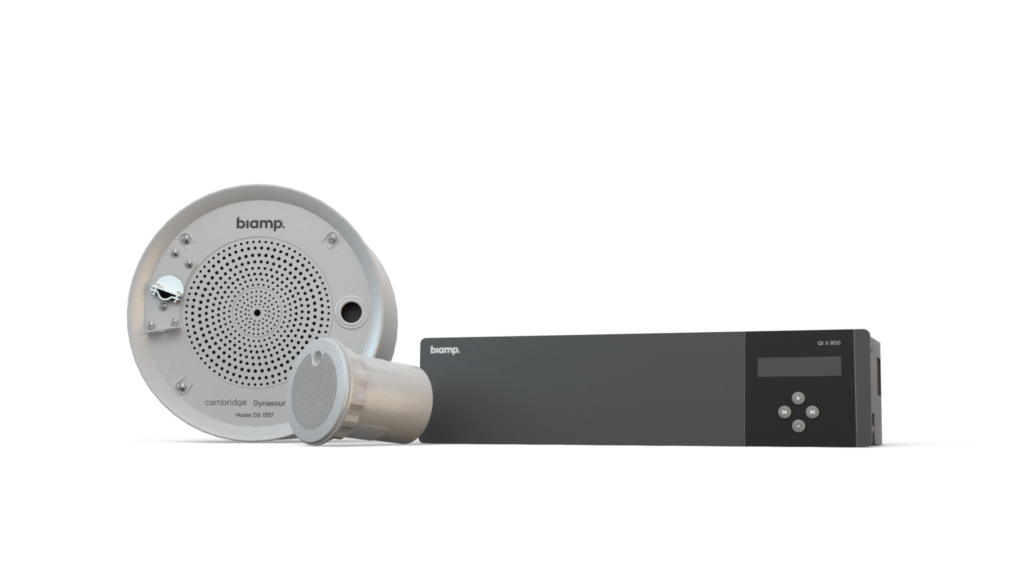
Why Sound Masking is Crucial for AV and Video Conferencing Installations in Corporate Environments.
In today’s dynamic corporate environments, audio-visual (AV) and video conferencing systems are no longer luxuries—they are necessities. Whether it’s hybrid work, global collaboration, or simply the need for seamless communication, companies invest heavily in advanced AV technology to ensure productivity and connectivity. But there’s one critical component often overlooked during these installations: sound masking.
What Is Sound Masking?
Sound masking is the strategic addition of ambient background sound—similar to airflow—that reduces the intelligibility of human speech and other distracting noises. It’s not about canceling sound, but rather about covering it in a way that makes it less disruptive.
Now, you might be thinking: “Why would we add sound to solve a sound problem?” The key lies in reducing the clarity of unwanted conversations, which helps prevent distractions and protects speech privacy.
The Overlooked Role of Sound in AV Design
When AV professionals plan and install conferencing systems, they focus on microphones, speakers, cameras, acoustic treatments, and digital interfaces. But even the most expensive microphone won’t perform well if it’s picking up every side conversation from the open-plan office outside. This is where sound masking becomes a powerful ally.
5 Reasons Sound Masking Should Be Part of Your AV & Conferencing Strategy
1. Improved Speech Privacy
Conference calls often include sensitive or confidential information. Without sound masking, conversations can be overheard outside of meeting rooms—especially through glass walls or poorly insulated partitions. Sound masking raises the ambient noise level in surrounding areas, making it difficult for others to clearly hear and understand what’s being said.
2. Reduced Distracting Noises
In open office spaces, random sounds—like laughter from a break room or a loud phone conversation—can interrupt concentration. During video calls, these background noises can be picked up by microphones and distract remote participants. Sound masking minimises the impact of these noises for both in-room attendees and those joining remotely.
3. Enhanced AV Performance
An optimal AV setup isn’t just about tech specs—it’s about how well the space functions as a whole. Sound masking complements acoustic treatments by smoothing out inconsistent sound behavior across the environment. This results in cleaner audio input/output during video calls and more effective use of beamforming microphones or ceiling array mics.
4. Increased Productivity
Studies show that office noise is one of the top sources of distraction and stress for employees. When AV systems are used for training, presentations, or collaboration, a space that sounds chaotic leads to reduced attention and retention. Sound masking fosters a more focused, professional atmosphere.
5. Scalable and Cost-Effective
Sound masking systems are surprisingly flexible and scalable. Whether you’re building a dozen huddle rooms or a few large executive boardrooms, sound masking can be tuned to match each space’s layout and use case—without major construction or rewiring.
Where Should Sound Masking Be Considered?
-
Meeting rooms and conference spaces
-
Open office areas adjacent to AV rooms
-
Hallways outside glass-walled conference rooms
-
Executive offices used for sensitive calls
By integrating sound masking into your AV planning from the start, you avoid retrofitting costs and ensure your video conferencing solutions truly deliver a seamless communication experience.
Final Thoughts
In a workplace that relies heavily on real-time communication and virtual collaboration, sound quality matters just as much as image clarity. Investing in sound masking is not about adding complexity—it’s about completing the picture. When thoughtfully implemented alongside AV systems, it creates an environment where people can communicate clearly, work productively, and protect what matters.
If you’re planning an AV or video conferencing upgrade, consider sound masking not as an afterthought—but as a key component of a well-rounded, high-performance workspace.